netParcel is actively monitoring the tariff situation and pending updates. All Duty and Tax calculations provided by our partners will be updated immediately to reflect any changes in real time.
Updated August 22, 2026
Update: After weeks of negotiation, talks between Canada and the United States broke down late in the evening of August 21, and the additional 50% tariff under Section 338 officially took effect at 12:01 a.m. ET on August 22, 2026. Prime Minister Mark Carney announced that Canada has suspended trade negotiations and recalled its negotiating team to Ottawa, stating that the two sides could not reach an agreement that met Canada’s objectives. Carney confirmed Canada intends to respond with matching, dollar-for-dollar tariffs of its own. This reporting is confirmed by CBC News, CP24/CTV News, and NPR.
On the U.S. side, Customs and Border Protection has issued formal implementation guidance (CSMS #69606660), confirming the tariff now applies to Canadian-origin goods entered for consumption, or withdrawn from warehouse for consumption, on or after 12:01 a.m. ET on August 22, 2026. CBP has also published the full list of affected HTSUS classifications, covering every tariff code affected under headings 9903.03.12 through 9903.03.16, organized by category.
What this means for your shipments: our landed cost calculations are fully up to date and already reflect this change, so you don’t need to do anything differently at checkout. Whether the additional duty applies to a given shipment depends on when it clears U.S. customs, not when it was placed or shipped, and the exact cutoff can vary slightly by carrier and shipping method. If your shipment was in transit around the effective date and you’re unsure whether it’s affected, reach out to our support team, and we will confirm.
We’ll keep monitoring the situation, including any Canadian retaliatory tariffs, and will update this post as things develop.
Updated August 19, 2026
Update: The tariff below was scheduled to take effect at 12:01 a.m. ET on August 19, 2026. Roughly two hours before that deadline, the tariff was paused for three days while negotiations between the U.S. and Canada continue, according to reporting from CBC News, NPR, and CNN. Prime Minister Mark Carney confirmed the tariffs are delayed until the end of day Friday, August 22, per The Globe and Mail. The tariff has not been withdrawn, only paused; it could still take effect after the new deadline depending on how negotiations conclude. We’re monitoring this closely and will update this post again once there’s a confirmed outcome.
Original Publication Below
What is the Section 338 tariff on Canada?
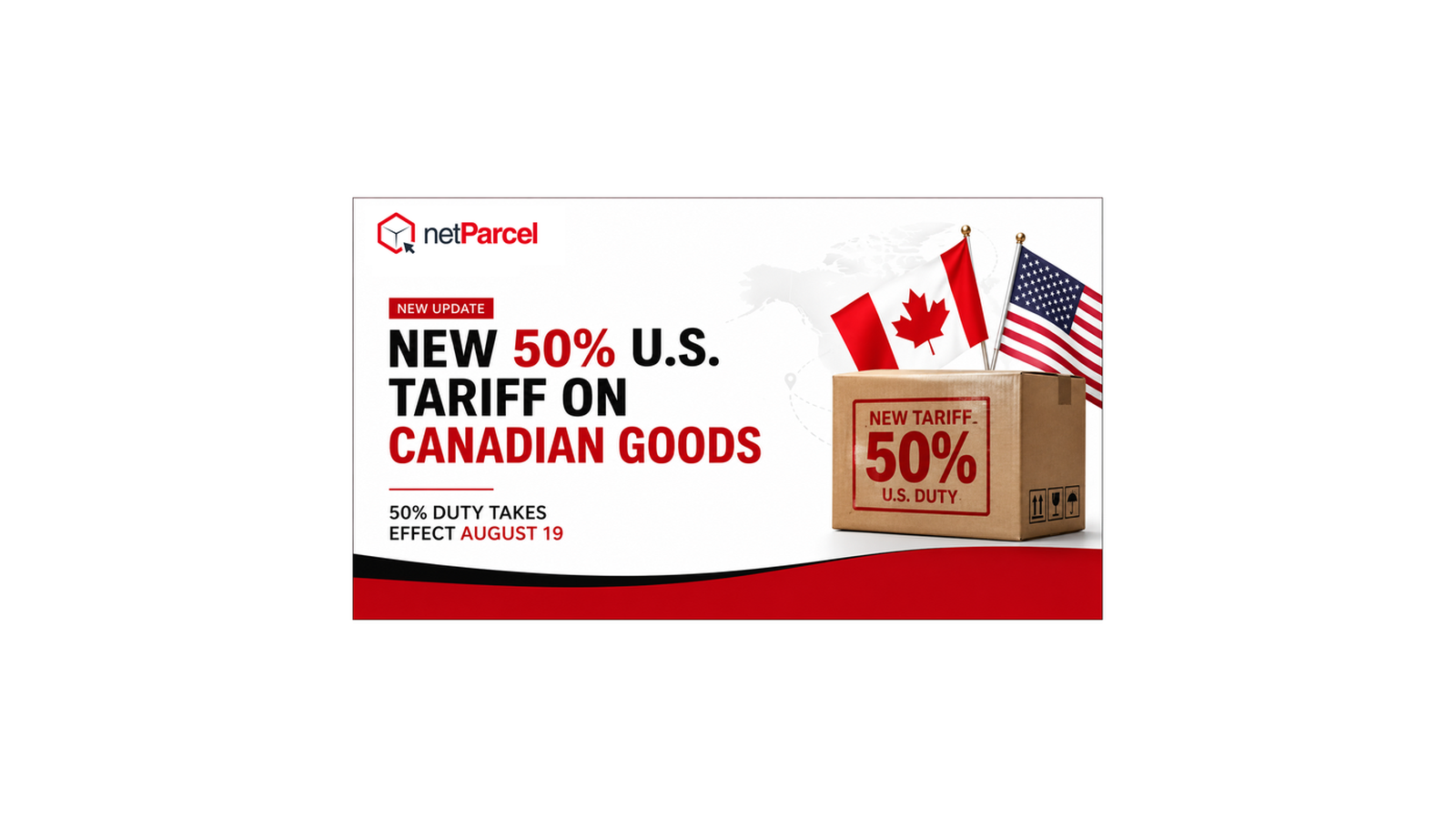
The new US tariff was authorized under Section 338 of the Tariff Act of 1930, a decades-old trade law that lets the U.S. president impose duties of up to 50% on goods from a country found to discriminate against U.S. commerce. It was signed into three separate proclamations on July 20, 2026, and takes effect 30 days later, on August 19, 2026.
This isn’t a third-party summary. The White House published an official fact sheet confirming the action: “President Donald J. Trump signed three Proclamations pursuant to Section 338 of the Tariff Act of 1930 to impose additional 50% tariffs on certain goods of Canada in response to Canada’s discriminatory treatment of American products.” You can read the full fact sheet directly from the White House at whitehouse.gov/fact-sheets.
Unlike some other tariff programs, this one has no built-in expiration date. It stays in place until the U.S. administration changes or removes it.
Section 338 and existing duties
Section 338 is an additive 50% duty. It doesn’t replace whatever a product already owes; it gets added on top. That means a covered product carrying its own existing duty rate ends up paying both, stacked together, not one instead of the other.
Example: Glassware from Canada
A Canadian glassware manufacturer ships decorative glass items valued at $5 each (HTS 7013.99.90) to a U.S. retailer. This HTS classification already carries a general duty rate of 7.2%, and it’s also specifically listed in the Section 338 annex. Since the 50% doesn’t replace that 7.2%, the two combine: the shipment owes a total of 57.2% in duty, the original 7.2% plus the additional 50% from Section 338.
Therefore, Section 338 is an additional duty, not a substitute for the one a product already owes. Wherever both apply, they’re simply added together.
Which products are affected?
Media coverage has focused on three headline categories: dairy, motor vehicles, and alcoholic beverages. But the actual list of affected tariff lines is much longer. Hundreds of product categories are covered, including:
- Furniture
- Textiles and apparel
- Cosmetics
- Paper goods
- Sporting goods (including items like hockey equipment and fishing gear)
- Cement and building materials
- Seeds and wigs, among other niche categories
A small number of categories are excluded, including energy products, potash, and goods already subject to separate steel, aluminum, and auto tariffs.
Does this tariff apply if I’m a Canadian merchant selling non-Canadian goods?
Not necessarily, and this is good news for many sellers who may assume the worst. Since the tariff is based on country of origin, not country of shipment, a Canadian merchant selling goods manufactured outside Canada is not subject to this 50% duty, even though the shipment ships from a Canadian address.
Example: if you’re a Canadian retailer selling a product made in Vietnam, Mexico, or the U.S. itself, and you ship it from your Canadian warehouse/location to a U.S. customer, that shipment isn’t a Canadian-origin good under this tariff. The proclamations target goods that originate in Canada, based on where they were made or substantially transformed, not where your business is based or where the parcel is dropped off.
A few things worth keeping in mind:
- Accurate origin documentation matters. If you’re shipping non-Canadian goods from Canada, customs will want correct country-of-origin paperwork. Defaulting to “Canada” as the origin because that’s where you ship from can trigger the duty incorrectly or look like an attempt to evade it.
- Other duties can still apply. This tariff doesn’t replace other trade measures. A product’s actual country of origin can still carry its own separate tariffs; this Section 338 action just doesn’t add the extra 50% layer on top for non-Canadian goods.
- Mixed catalogues need SKU-level review. If you sell a mix of Canadian-made and non-Canadian-made products, you can’t treat your whole catalogue the same way. Each SKU’s actual origin determines whether it’s exposed.
Does CUSMA protect my products from this tariff?
No. This detail catches a lot of Canadian sellers off guard. Products that qualify for preferential treatment under the CUSMA may still be subject to the additional 50% duty. None of the three proclamations behind this tariff includes a CUSMA carve-out.
If you’ve been assuming CUSMA-qualified goods are shielded from new trade actions, this tariff is the exception to plan around.
CUSMA in practice: one shipment that stays duty-free, one that doesn’t.
Here’s how these rules actually play out for two real CUSMA-qualifying shipments.
Example 1: A shipment that clears completely duty-free
A Canadian publisher ships a CUSMA-certified order of Canadian-origin hardcover books to a U.S. bookseller. The books qualify for a 0% CUSMA preferential rate, and their HTS classification (4901.99.00.70) is not included in any of the three Section 338 tariff annexes. The shipment therefore enters the United States with 0% CUSMA duty and no additional Section 338 duty.
Example 2: A shipment that gets hit with the extra 50%
A Canadian furniture maker ships a CUSMA-certified solid wood coffee table (HTS 9403.60.80) to a U.S. retailer. Assuming the table meets the applicable CUSMA rules of origin, it would normally qualify for duty-free entry under CUSMA. But this HTS classification is listed directly in the Section 338 annex; despite being titled the “motor vehicle” proclamation, it actually reaches far beyond vehicles into categories like furniture, cosmetics, and textiles. Because CUSMA status provides no exemption here, this shipment clears at its normal CUSMA rate (0%) plus the additional 50% Section 338 duty on top.
| Example 1 (Hardcover books) | Example 2 (Wood coffee table) | |
|---|---|---|
| CUSMA-qualifying | Yes | Yes |
| CUSMA preferential rate | 0% | 0% |
| HTS classification on a Section 338 annex | No | Yes; falls under the proclamation annex |
| Total duty owed | 0% | 50% |
The takeaway: CUSMA status alone never determines the outcome. What matters is whether a product’s specific HTS classification appears on one of the three Section 338 annexes. Products outside the covered lines, like books, clear duty-free on their CUSMA rate alone. Everything of Canadian origin that does fall under one of the annexes gets the extra 50%, CUSMA or not.
What will customers see at checkout?
For any order that is created on or after August 19, 2026, customers will see the additional duty reflected in their landed cost total at checkout, alongside product pricing and shipping. This happens automatically. Your landed cost estimates will update automatically to reflect the new duty rate, so you don’t need to configure or turn anything on. Buyers get the same transparent, all-in pricing they’re used to, just with a higher total for affected products.
What if my order ships before August 19 but arrives after?
This is one of the most important details in the whole proclamation, and it catches a lot of people off guard. The tariff is triggered by the date a shipment is entered for consumption at U.S. customs, not the date it ships from Canada.
That means a shipment can leave your warehouse before the effective date and still get hit with the new duty if it clears customs on or after August 19.
Example: A customer in Ohio orders a $200 wooden furniture item from your Canadian shop on August 15. You ship it out on August 18, the day before the tariff takes effect. But because of normal transit and customs processing time, the shipment doesn’t clear U.S. customs until August 20, one day after the new duty kicks in.
Even though the order was placed and shipped before August 19, the shipment is charged the additional 50% duty because it was entered for consumption on August 20. The ship date doesn’t protect it. Only the customs entry date matters.
What this means for your customers: if there’s any chance an order could clear customs on or after August 19, they should expect the new duty to apply, even if it shipped before then.
What Canadian sellers should do before August 19?
- Review your product catalogue for Canadian-origin goods. Identify which SKUs are made in Canada and could fall into a newly covered tariff line, not just the headline categories of dairy, alcohol, and motor vehicles.
- Get ahead of it with your U.S. customers. If you sell products likely to be affected- apparel, furniture, cosmetics, sporting goods, and more- let your U.S. audience know that landed costs on these items are about to increase.
- Watch for further updates. Section 338 gives the administration room to expand, suspend, or modify these tariffs, so this list of affected products could change. Your landed cost estimates will continue to update automatically as those changes happen, so you won’t need to track rate changes manually.
Bottom line
This is a meaningful shift for Canadian sellers shipping to the U.S. It applies broadly; it isn’t limited to the headline categories, and USMCA doesn’t offer an exemption. The best move right now is to identify which products are affected and start communicating with your U.S. customers ahead of the August 19 effective date.